Flexible Office Space for Rent at Workstyle Spaces 1

How Many Conference Rooms Does Your Business Really Need?

When planning an office, it’s easy to assume that more meeting rooms automatically mean a more productive workplace. But too many conference rooms can take up valuable square footage, while too few can leave employees constantly searching for somewhere to meet.

So, how many conference rooms does your business actually need?

Start With How Your Team Actually Meets

The answer depends on your team size, how often you meet, the type of work you do, and how your employees use the office. With thoughtful office space planning, you can create a workplace that supports collaboration without paying for space you rarely use.

Before deciding how many rooms you need, take a look at your team’s meeting habits. Do employees have several meetings every day? Are most meetings with clients and outside partners, or are they quick internal check-ins? Do people frequently take video calls? Do employees need quiet spaces for focused conversations?

These questions can tell you more than headcount alone.

A company with 20 employees who spend most of their day in collaborative meetings may need more meeting space than a 40-person team that primarily works independently. The goal of workspace planning is to match your office environment to the way your team works, not simply fill a floor plan with rooms.

You may also like: Rightsizing Your Workspace: How Flexible Spaces Help Teams to Thrive
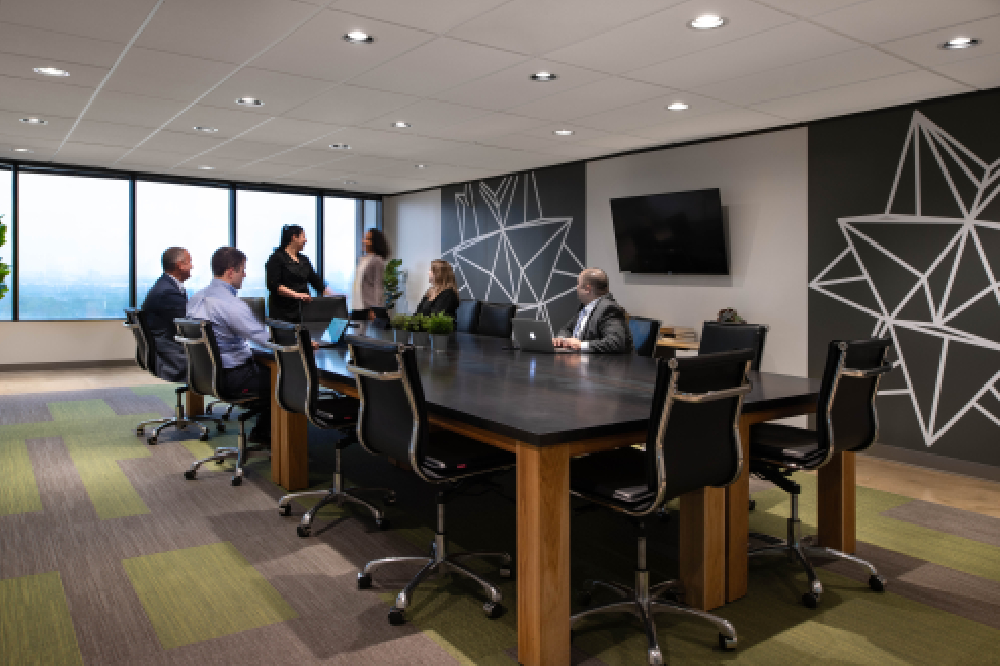
How Many Conference Rooms Should You Have?

There’s no universal formula, but a mix of meeting spaces can help you make better use of your office.

Small Teams: 1–2 Meeting Spaces

For smaller businesses, one main conference room may be enough for larger meetings, presentations, or client visits. Adding a smaller meeting area or huddle room gives employees another option for quick conversations without occupying the main room.

For example, a team of 10–20 people might benefit from:

  • One conference room for 6–10 people
  • One small huddle room for 2–4 people
  • Open or shared areas for informal collaboration

Growing Teams: 2–4 Meeting Spaces

As your team grows, scheduling conflicts become more common. A single conference room can quickly become a bottleneck.

A combination of spaces can give employees more flexibility:

  • One larger conference room for 8–12 people
  • One or two smaller rooms for 4–6 people
  • One huddle room for quick meetings or video calls

This approach also helps prevent employees from using a large conference room for a 15-minute conversation between two people.

Larger Teams: Consider a Variety of Spaces

Larger organizations may need several meeting spaces, but that doesn’t necessarily mean several large conference rooms.

Instead, consider a mix of room sizes based on how often each type of meeting occurs. Larger rooms can handle important presentations and group meetings, while smaller rooms can accommodate one-on-one conversations, interviews, and virtual calls.

The key is variety.

Don't Underestimate the Huddle Room

A huddle room is a small meeting space designed for quick, informal collaboration. It typically accommodates two to four people and can be particularly useful for hybrid teams.

Instead of booking a large conference room every time someone needs to discuss a project, employees can use a huddle room for:

  • Quick team check-ins
  • Video conferences
  • Brainstorming sessions
  • One-on-one meetings
  • Private conversations
  • Short client calls

For many businesses, adding smaller meeting spaces can be a more efficient use of square footage than adding another large conference room.

You may also like: What Is a Huddle Room? Purpose, Benefits, and Setup Guide

What Is the Right Conference Room Size?

Conference room size should be based on capacity, function, and frequency of use.

As a general starting point:

Meeting Space

Typical Capacity

Best For

Huddle room

2–4 people

Quick meetings, calls, collaboration

Small meeting room

4–6 people

Team meetings, interviews

Conference room

6–12 people

Client meetings, presentations

Large conference room

12+ people

Company meetings, presentations, events

These aren’t strict requirements. Furniture, technology, accessibility, circulation space, and the overall layout of the office all affect how comfortably a room functions.

A room that technically fits 10 people isn’t necessarily the right choice if everyone feels cramped once a conference table, chairs, screens, and equipment are added.

Build a Workspace That Works for You

There isn’t a magic number of conference rooms that works for every business. The right setup depends on your team size, meeting habits, work style, and how your space needs to evolve over time. That’s why smart workspace planning isn’t just about counting desks or conference rooms.

With Workstyle, you don’t have to guess how much office space you need or commit to more space than your business requires. From small offices and larger spaces, Workstyle gives you the freedom to choose what fits your team today and adjust as your needs change!

Get access to professional amenities, move-in-ready spaces, meeting rooms, and flexible options that let you focus less on managing your office and more on growing your business. Contact us and find your ideal workspace today!
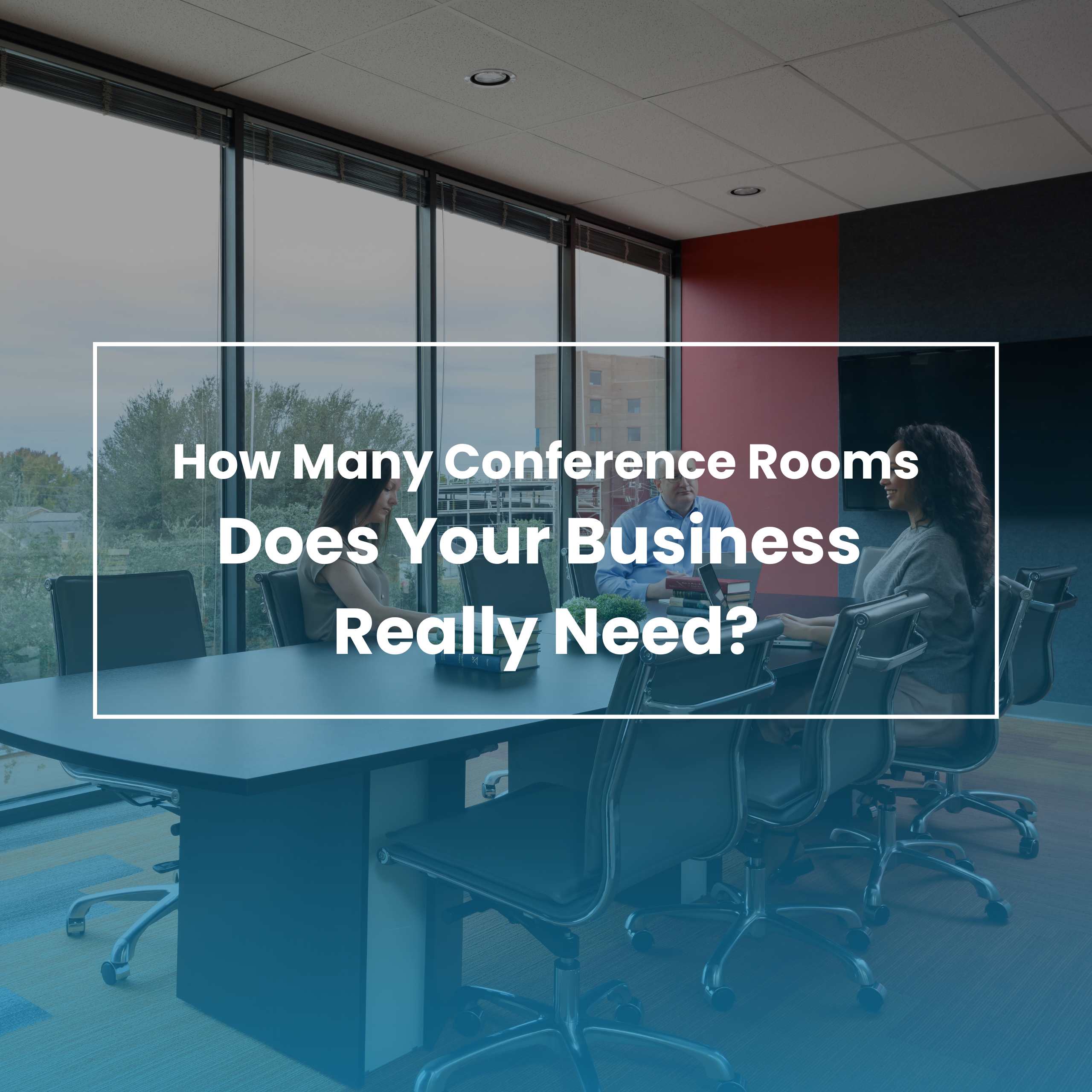

When planning an office, it’s easy to assume that more meeting rooms automatically mean a more productive workplace. But too many conference rooms can take up valuable square footage, while too few can leave employees constantly searching for somewhere to meet.

So, how many conference rooms does your business actually need?

Start With How Your Team Actually Meets

The answer depends on your team size, how often you meet, the type of work you do, and how your employees use the office. With thoughtful office space planning, you can create a workplace that supports collaboration without paying for space you rarely use.

Before deciding how many rooms you need, take a look at your team’s meeting habits. Do employees have several meetings every day? Are most meetings with clients and outside partners, or are they quick internal check-ins? Do people frequently take video calls? Do employees need quiet spaces for focused conversations?

These questions can tell you more than headcount alone.

A company with 20 employees who spend most of their day in collaborative meetings may need more meeting space than a 40-person team that primarily works independently. The goal of workspace planning is to match your office environment to the way your team works, not simply fill a floor plan with rooms.

You may also like: Rightsizing Your Workspace: How Flexible Spaces Help Teams to Thrive

How Many Conference Rooms Should You Have?

There’s no universal formula, but a mix of meeting spaces can help you make better use of your office.

Small Teams: 1–2 Meeting Spaces

For smaller businesses, one main conference room may be enough for larger meetings, presentations, or client visits. Adding a smaller meeting area or huddle room gives employees another option for quick conversations without occupying the main room.

For example, a team of 10–20 people might benefit from:

  • One conference room for 6–10 people
  • One small huddle room for 2–4 people
  • Open or shared areas for informal collaboration

Growing Teams: 2–4 Meeting Spaces

As your team grows, scheduling conflicts become more common. A single conference room can quickly become a bottleneck.

A combination of spaces can give employees more flexibility:

  • One larger conference room for 8–12 people
  • One or two smaller rooms for 4–6 people
  • One huddle room for quick meetings or video calls

This approach also helps prevent employees from using a large conference room for a 15-minute conversation between two people.

Larger Teams: Consider a Variety of Spaces

Larger organizations may need several meeting spaces, but that doesn’t necessarily mean several large conference rooms.

Instead, consider a mix of room sizes based on how often each type of meeting occurs. Larger rooms can handle important presentations and group meetings, while smaller rooms can accommodate one-on-one conversations, interviews, and virtual calls.

The key is variety.

Don't Underestimate the Huddle Room

A huddle room is a small meeting space designed for quick, informal collaboration. It typically accommodates two to four people and can be particularly useful for hybrid teams.

Instead of booking a large conference room every time someone needs to discuss a project, employees can use a huddle room for:

  • Quick team check-ins
  • Video conferences
  • Brainstorming sessions
  • One-on-one meetings
  • Private conversations
  • Short client calls

For many businesses, adding smaller meeting spaces can be a more efficient use of square footage than adding another large conference room.

You may also like: What Is a Huddle Room? Purpose, Benefits, and Setup Guide

What Is the Right Conference Room Size?

Conference room size should be based on capacity, function, and frequency of use.

As a general starting point:

Meeting Space

Typical Capacity

Best For

Huddle room

2–4 people

Quick meetings, calls, collaboration

Small meeting room

4–6 people

Team meetings, interviews

Conference room

6–12 people

Client meetings, presentations

Large conference room

12+ people

Company meetings, presentations, events

These aren’t strict requirements. Furniture, technology, accessibility, circulation space, and the overall layout of the office all affect how comfortably a room functions.

A room that technically fits 10 people isn’t necessarily the right choice if everyone feels cramped once a conference table, chairs, screens, and equipment are added.

Build a Workspace That Works for You

There isn’t a magic number of conference rooms that works for every business. The right setup depends on your team size, meeting habits, work style, and how your space needs to evolve over time. That’s why smart workspace planning isn’t just about counting desks or conference rooms.

With Workstyle, you don’t have to guess how much office space you need or commit to more space than your business requires. From small offices and larger spaces, Workstyle gives you the freedom to choose what fits your team today and adjust as your needs change!

Get access to professional amenities, move-in-ready spaces, meeting rooms, and flexible options that let you focus less on managing your office and more on growing your business. Contact us and find your ideal workspace today!

More Blogs